The Story of the Chapel
A Village Takes Root
In the mid-1800s, the small village of Rockville was a busy and hopeful place. Mills turned along the waterways, farms dotted the surrounding land, and families built their lives around the rhythms of village life. At the heart of this growing community, residents came together in 1851 to build a church that would serve both their spiritual and social lives.
That year, the Rockville Free Baptist Church—today’s Rockville Community Chapel—was built and dedicated under the leadership of Elder Mariner. During his six years with the congregation, the church flourished, growing to nearly 200 members. The modest white chapel quickly became a familiar landmark in the village, its steeple rising above the surrounding homes and fields.
A Faithful Gathering Place
Like many rural churches, Rockville’s congregation reflected the fortunes of the village itself. When the local population declined between 1857 and 1868, church membership fell as well. Yet the community remained determined to keep the chapel active.
From 1868 to 1882 the church supported its own pastor, and when that became difficult, Rockville joined with neighboring congregations to continue services. Between 1882 and 1896 the chapel collaborated with the Free Will Baptist Church of Rockland—now known as Littlefield Memorial Baptist Church. Later, in 1896, the congregation joined with the First Baptist Church of West Rockport to share a minister.
Through all these years, the chapel remained the center of village life. Within its walls generations of families gathered for worship, weddings, baptisms, and funerals. Children practiced eagerly for Christmas programs. Neighbors met for celebrations and suppers. The chapel was more than a church—it was the place where the life of the village unfolded.
When the Village Changed
By the 1970s, however, Rockville had grown quieter. The mills had closed, businesses disappeared, and fewer families lived in the village. With the congregation now too small to sustain regular services, the church was decommissioned.
Yet the building itself still held deep meaning for the community. Rather than allowing it to fade away, residents chose to preserve it as a nondenominational gathering place. The building was renamed the Rockville Community Chapel, honoring both its history and its future.
Saving a Landmark
Over time, the historic chapel fell into serious disrepair. But the people of Rockville were not willing to lose the last remaining public building in their village.
Through years of dedication—yard sales, book and bake sales, community suppers, concerts, and countless generous donations—the Rockville Community Chapel Association raised the funds needed to restore the beloved structure.
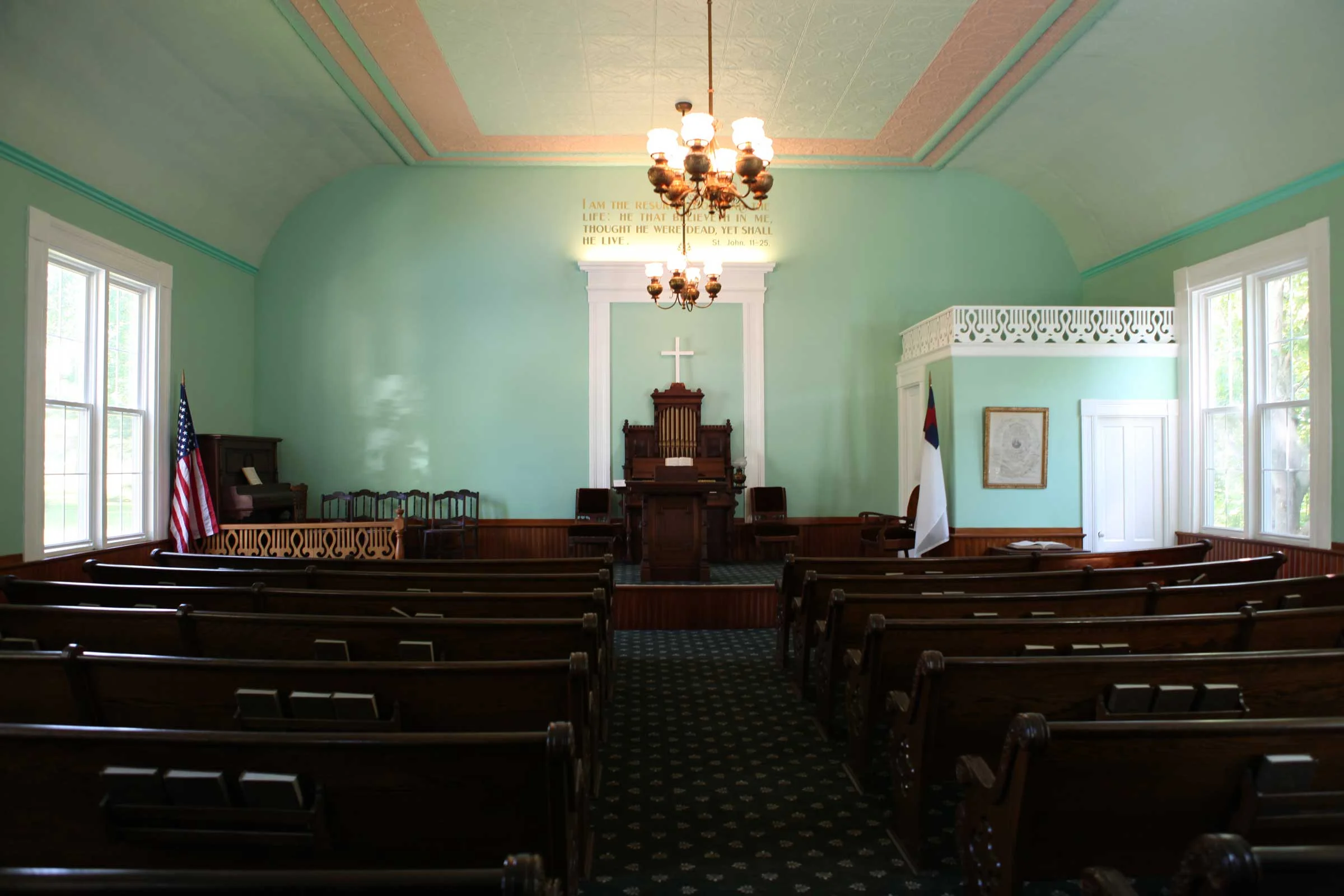
Their efforts gradually brought the chapel back to life. The belfry, home to the Hooper cast bell, was preserved and the roof was reshingled. Inside, plaster walls were carefully repaired and painted in their original colors. The historic tin ceiling was restored, new windows were installed, and water-stained pews were refinished. New carpeting was laid, and a new spire rose once again above the village.
In 2021, the final touches were completed with new siding, new front doors, and improvements to the entrance ramp—ensuring the chapel could continue welcoming visitors for years to come.
A Place That Still Brings People Together
Today, the Rockville Community Chapel continues the tradition that began more than 170 years ago. Though it no longer holds regular worship services, the chapel remains a gathering place for the community.
Concerts fill the room with music. Weddings and memorial services mark life’s most meaningful moments. Seasonal celebrations and local events bring neighbors and visitors together beneath the same tin ceiling that has witnessed generations of village life.
In a village that has changed in many ways, the chapel still stands—quietly reminding all who pass that community, memory, and place are deeply connected.